Uber One is sold as a membership on top of rides and food delivery — about $9.99 a month or $96 a year in the complaint’s summary — with promised savings and a promise you can leave whenever you want. In April 2025 the US Federal Trade Commission (FTC) sued Uber Technologies, Inc. and Uber USA, LLC under the FTC Act and the Restore Online Shoppers’ Confidence Act (ROSCA), saying that pitch did not match how enrolment and cancellation actually worked. States later joined an amended complaint; the matter remained pending on the FTC’s case page.
The marketing page exhibited in the complaint puts “Cancel anytime without fees or penalties” in the benefits list next to delivery and ride perks:
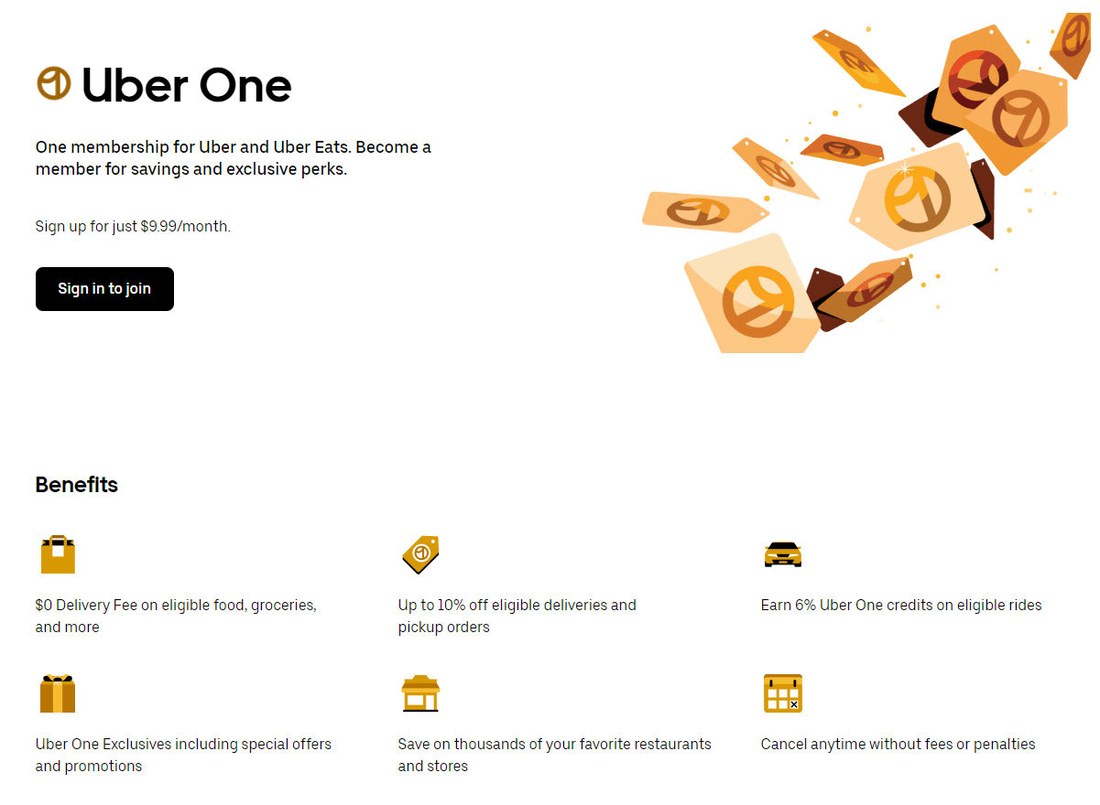
Three strands sit at the centre of the agency’s story. First, consumers reported being enrolled in Uber One without consent — charges appearing when they said they never signed up. Second, Uber allegedly failed to deliver the savings it advertised for members versus non-members. Third, despite “cancel anytime” and “no additional fees” language, the FTC says stopping the subscription was anything but simple.
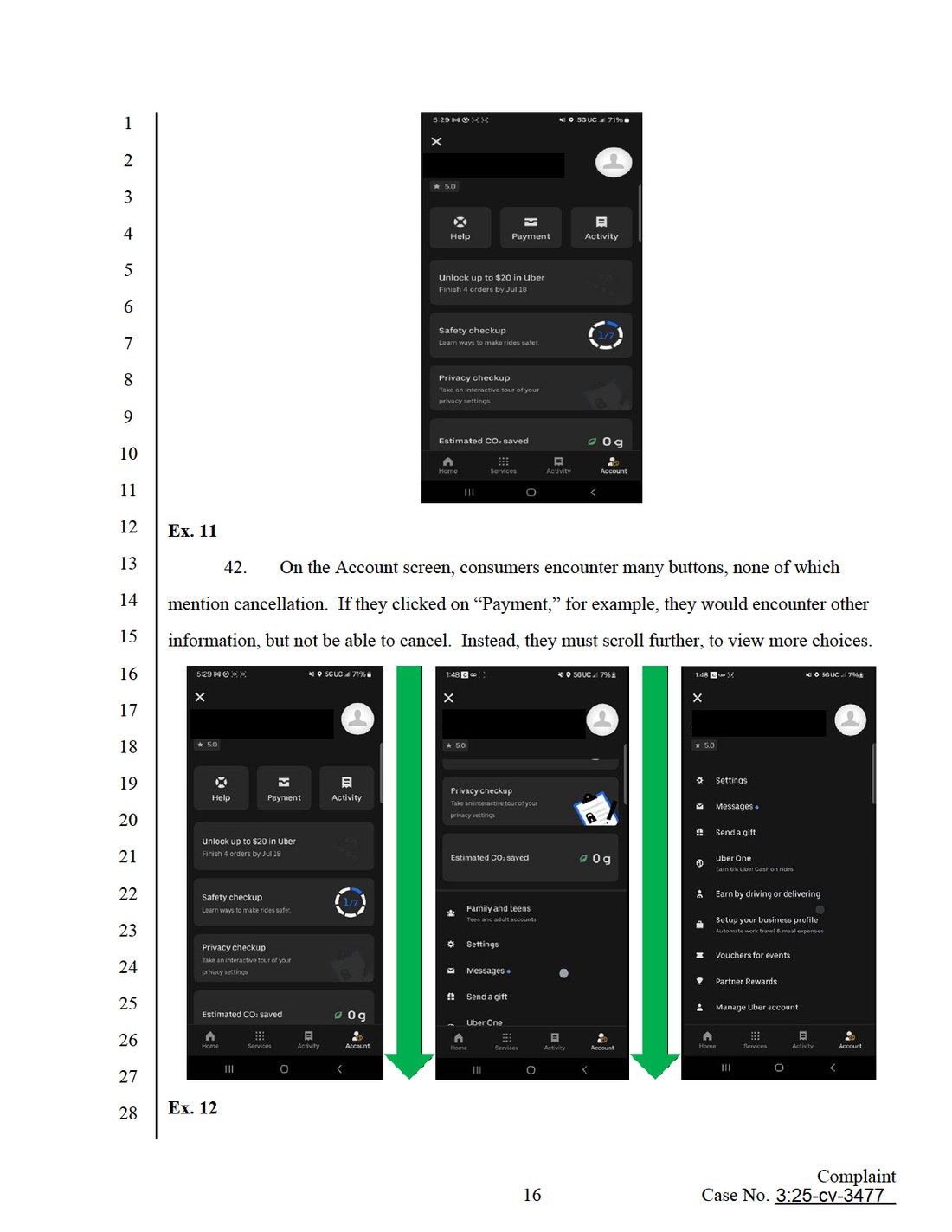
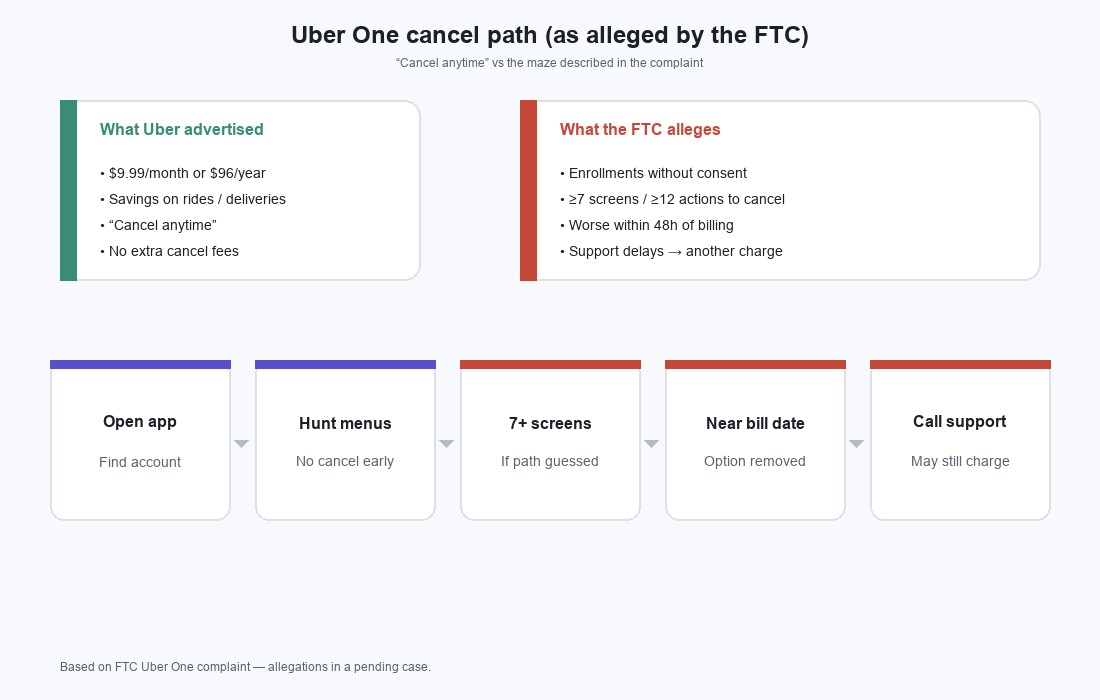
The original complaint sketches a cancel path that, if you guess the right menus, still takes at least 12 actions across about seven screens, with cancellation not even mentioned until roughly the fourth screen. Exhibits show an Account screen crowded with Help, Payment and Activity — none labelled cancel — and a long scroll past Uber One promos before “Manage Uber account” appears:
Within 48 hours of the billing date, the agency alleges the in-app cancel option disappears, pushing people through many more screens and, eventually, customer service — where delays can mean another renewal lands before the membership is stopped:
That pattern matters because ROSCA expects clear disclosure of negative-option terms, express informed consent before charging, and a simple way to stop recurring bills. A maze that gets worse near the renewal date is exactly the kind of friction regulators flag when membership marketing says “anytime.”
These are civil allegations in an ongoing case, not a finding that every Uber One member was enrolled by trickery. Check the live FTC docket if you need current filings.
If an Uber One line appeared on your statement and you never meant to join — or you tried to cancel and still got billed — keep screenshots of the app flow, the charge, and any chat transcripts. Dispute with your card issuer where appropriate, and use Get help. Skip cold “recovery” offers that want a fee first — Recovery.
Related: Chegg’s cancel-maze settlement and Shutterstock’s alleged cancel-fee funnel.
This article is for general information only. It is not legal or financial advice. Details change. If you have lost money, contact your bank or card issuer and use the routes on the help pages.