Homework help and writing tools are sold on monthly subscriptions aimed at students and parents. In September 2025 the US Federal Trade Commission (FTC) announced that Chegg, Inc. would pay $7.5 million to settle allegations that stopping those subscriptions was unlawfully hard — and that charges continued after people thought they had cancelled.
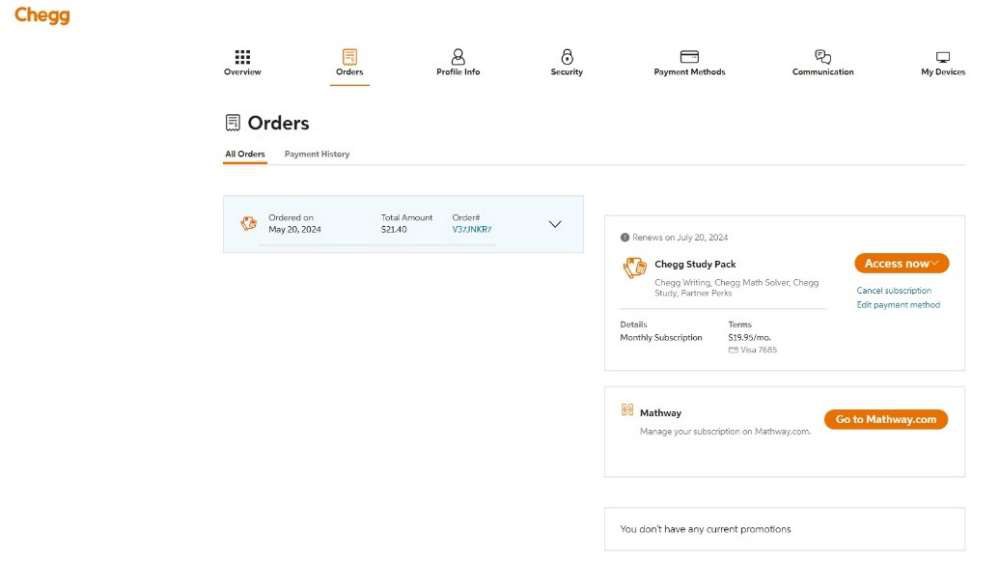
The complaint, brought under the FTC Act and the Restore Online Shoppers’ Confidence Act (ROSCA), says Chegg failed to provide a simple mechanism to end auto-renewing study tools. Finding cancel online allegedly meant a trail of unintuitive clicks. On an Orders screen shown in related materials, a bright “Access now” button sits above a smaller “Cancel subscription” text link:
Starting the flow was not enough: consumers faced extra screens, retention-style friction, and multiple “Confirm Cancellation” steps. A mobile step lists study perks above Cancel / Keep choices:
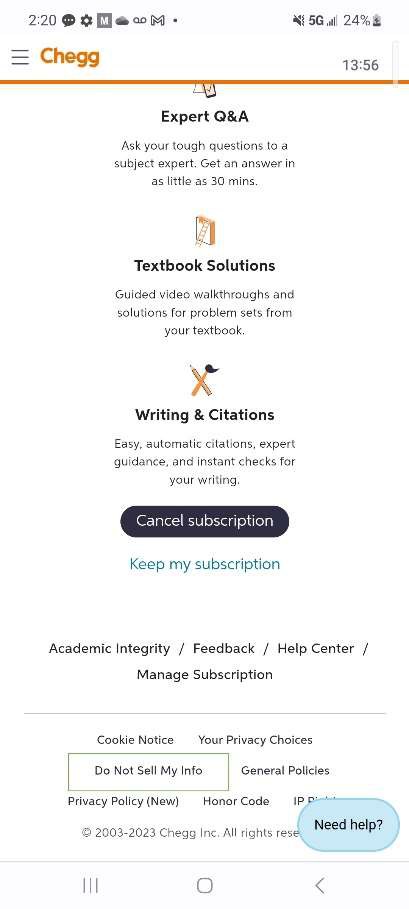
In some product paths, the FTC says, even a second confirm only led to more text and another button before the membership actually ended.
Worse, the agency alleges Chegg kept charging people after they had requested cancellation — including after they contacted customer service. Since October 2020, the complaint states, Chegg charged nearly 200,000 consumers after a cancel request. People who believed they were done had to start again, then chase refunds that were sometimes refused or only partial:
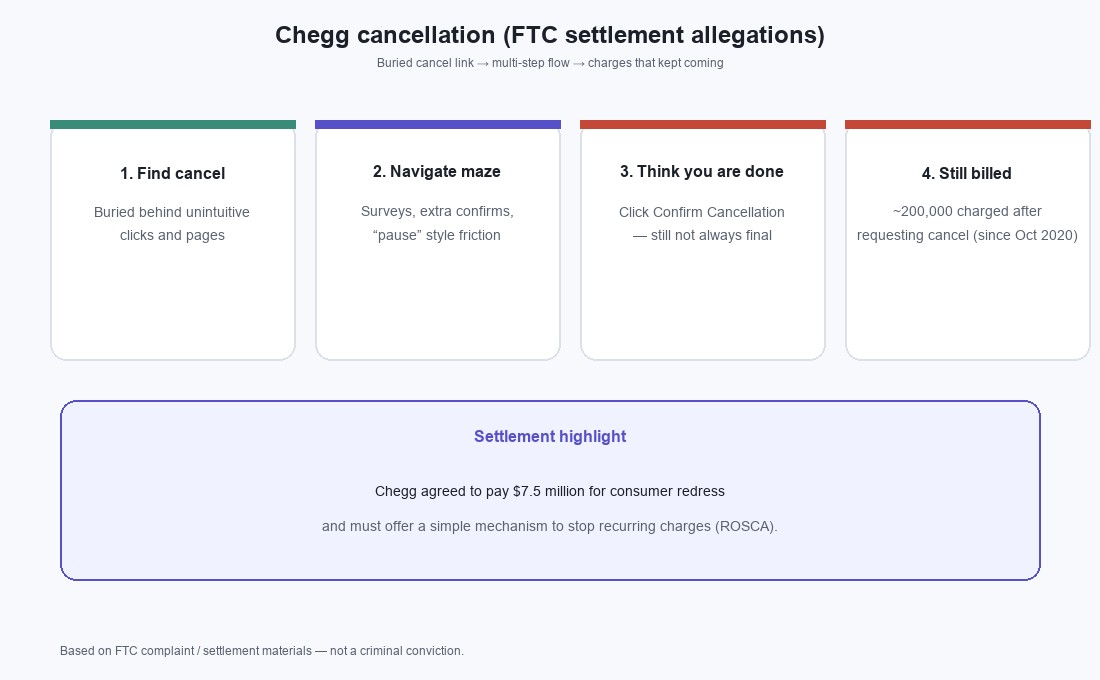
ROSCA’s baseline is straightforward: disclose material negative-option terms clearly, get express informed consent before charging, and let people stop recurring bills without a scavenger hunt. A settlement is not the same as a trial verdict; Chegg neither admits nor denies the allegations except as required for the court order, while agreeing to redress money and simpler cancellation going forward.
If you paid for Chegg study tools after you tried to leave, keep the cancel confirmations, chat logs and statement lines. Ask the card issuer about a dispute where the charge looks unauthorised, and use Get help. Be sceptical of anyone promising to “recover” the money for an upfront fee — Recovery.
Related: Uber One’s alleged cancel maze and the FTC subscription dark-patterns roundup.
This article is for general information only. It is not legal or financial advice. Details change. If you have lost money, contact your bank or card issuer and use the routes on the help pages.