Amazon Prime is one of the world’s most familiar subscriptions. In June 2023 the US Federal Trade Commission (FTC) sued Amazon.com, Inc. under the FTC Act and the Restore Online Shoppers’ Confidence Act (ROSCA), saying the company had spent years nudging people into auto-renewing Prime memberships they did not mean to buy — and then making it hard to leave.
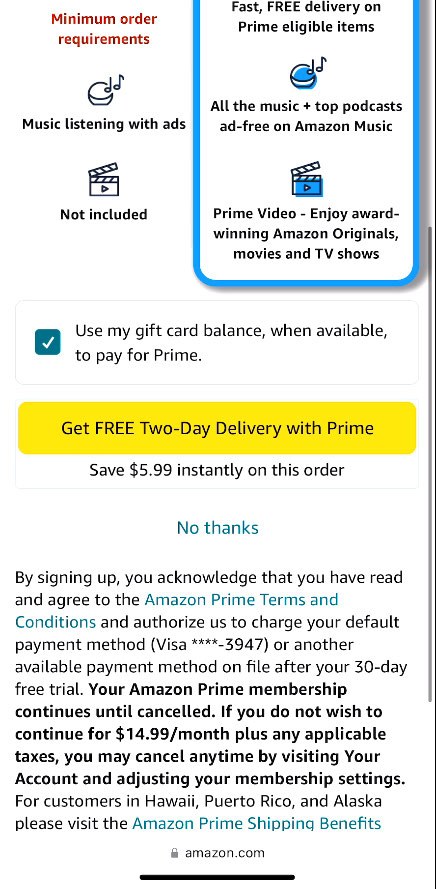
The complaint’s core word is dark patterns: manipulative interface designs that steer you into a recurring bill. The FTC says Amazon’s own documents talked about “accidental” sign-ups and estimated large numbers of subscribers who were unaware they had Prime. Designers allegedly documented tricks “designed to mislead or trick users” into recurring charges. Checkout exhibits show a large yellow Prime button and a smaller “No thanks” link, with trial-to-membership language in fine print:
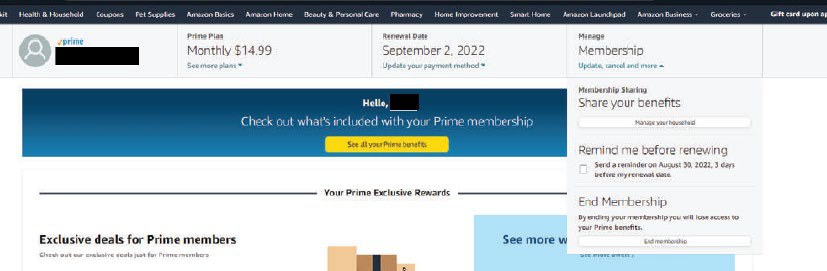
Cancellation gets its own chapter. The FTC describes a complex flow — nicknamed in reporting around the case as an “Iliad”-style path — whose purpose, according to the complaint, was not to let people cancel cleanly but to stop them cancelling. Account screens nest ending membership under “Update, cancel and more,” beside benefit reminders:
Changes that would have shortened that path were slowed or rejected, the FTC alleges:
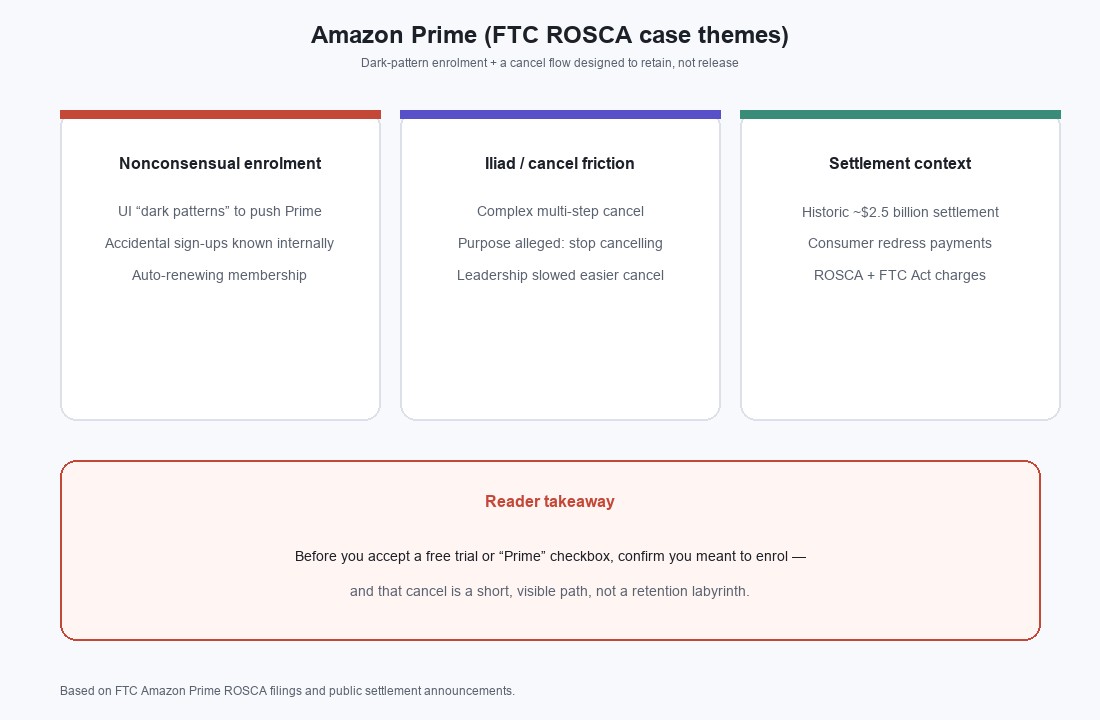
The litigation later produced a historic settlement announcement on the order of $2.5 billion, with consumer redress payments continuing on the FTC’s case timeline. As with other FTC settlements, the public story mixes complaint allegations, court orders and redress programmes — check the live Amazon ROSCA matter page for the current status of payouts and injunction terms.
For readers, the practical lesson is simpler than the docket. Treat every “start Prime” checkbox or free-trial banner as a subscription decision. Look for the cancel path before you need it. If you were billed for Prime you never meant to join, gather order emails and statements, use Amazon’s account tools, dispute through your card issuer if needed, and follow Get help. Cold “we recover Prime refunds for a fee” pitches are a classic second scam — Recovery.
Related: Uber One’s cancel-anytime complaint and the subscription dark-patterns roundup.
This article is for general information only. It is not legal or financial advice. Details change. If you have lost money, contact your bank or card issuer and use the routes on the help pages.