Most consumer fraud stories stop at the fake pop-up or the call-centre script. The Nuvei matter is about the rails underneath: who gives those merchants the ability to take card payments.
In September 2026 the US Federal Trade Commission announced that Canada-based payment processor Nuvei Corporation and related entities would pay $4.85 million to settle charges that they opened and kept processing accounts for merchants they knew — or should have known — were deceiving consumers, including offshore tech-support schemes. The URL slug on the press release says “485,” which is easy to misread as hundreds of millions; the settlement figure is four point eight five million.
The complaint focuses heavily on Reimage. The FTC alleges Nuvei processed more than $30 million in consumer payments for that operation between 2017 and 2023, spreading volume across multiple merchant accounts so chargebacks looked quieter to card networks, using misleading merchant applications, and even continuing after a Visa warning that Reimage was impersonating Microsoft with fake virus alerts. Consumer-facing pages in the record pitch remote “technician” help and LogMeIn-style download codes — the kind of trust packaging tech-support schemes lean on:
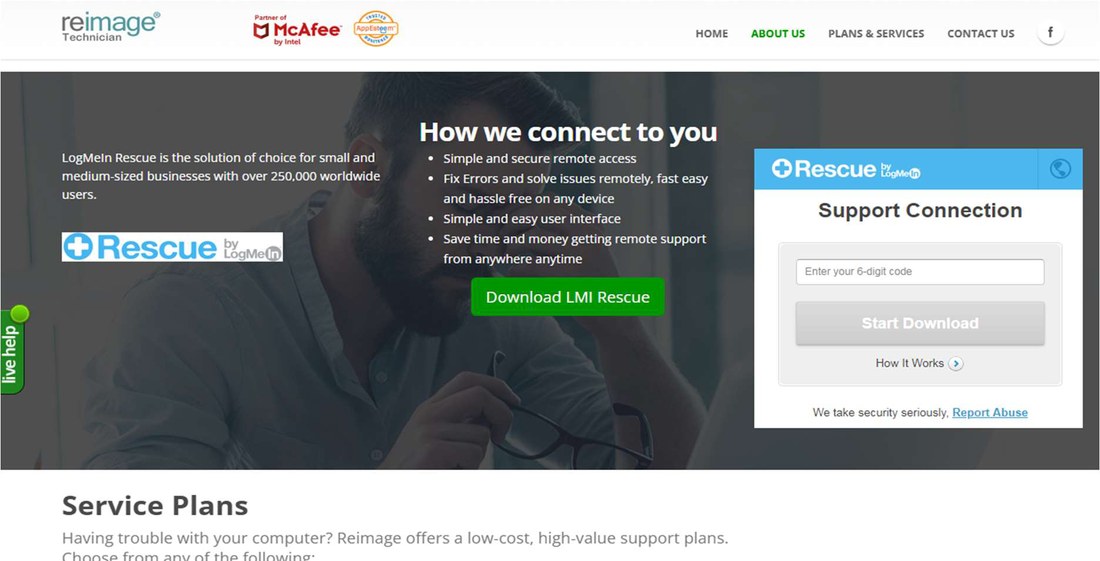
Processing allegedly stopped only after Reimage itself pulled back amid an FTC investigation. The agency also describes accounts for other deceptive tech-support sellers, bogus business-opportunity merchants and sellers previously terminated for cause by other banks:
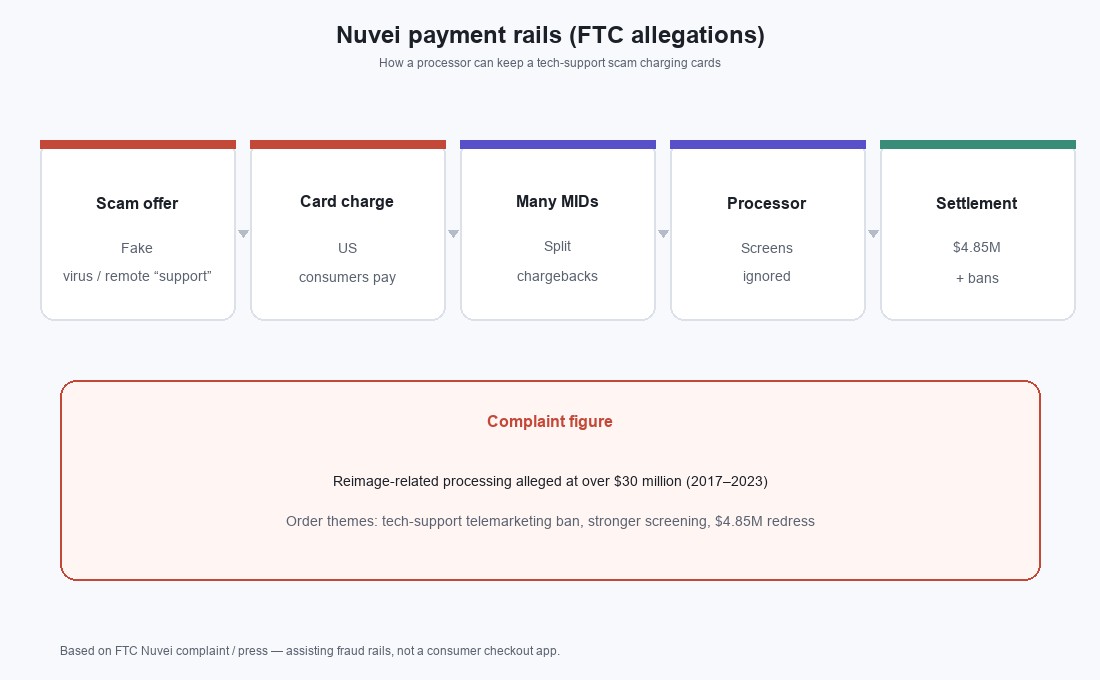
Under the proposed order themes summarised by the FTC, Nuvei faces a ban on processing for certain tech-support telemarketing and security-pop-up sellers, rules against helping merchants dodge network monitoring, and duties to screen and monitor clients — especially when chargeback rates spike. The FTC has also pursued Reimage’s operators and, separately, another processor (Paddle) over related merchant-of-record theories.
For readers, the lesson is upstream awareness: a polished card charge does not prove a seller is legitimate. If a remote “Microsoft / Apple support” pop-up led to a subscription on your statement, dispute the charge, tell your bank it may be tech-support fraud, and use Get help. Ignore anyone who cold-calls offering paid “recovery” — Recovery.
Related consumer funnels in this series: JustAnswer and the subscription dark-patterns roundup.
This article is for general information only. It is not legal or financial advice. Details change. If you have lost money, contact your bank or card issuer and use the routes on the help pages.