You need a quick answer from a lawyer, a vet or a health expert. The ad says you can “join” for a dollar or five. You type the question, enter a card, and expect a one-off tip. In January 2026 the US Federal Trade Commission (FTC) sued JustAnswer LLC and its CEO, saying that flow was a trap: the tiny “join” fee sat next to an immediate monthly subscription of $28 to $125, then the same amount again every month until you cancelled.
JustAnswer runs JustAnswer.com and specialty domains such as AskALawyerOnCall.com, AskAVeterinarianOnline.com and AskWomensHealth.com. The FTC’s complaint under the FTC Act and the Restore Online Shoppers’ Confidence Act (ROSCA) says the headline pitch was a nominal one-time join fee, while the real requirement was that join fee plus a recurring membership charged as soon as the card was on file. Limited subscription language appeared on the site, the agency alleges, but not clearly and conspicuously enough for informed consent.
Stripped to a sketch, the gap between the ad and the bill looks like this:
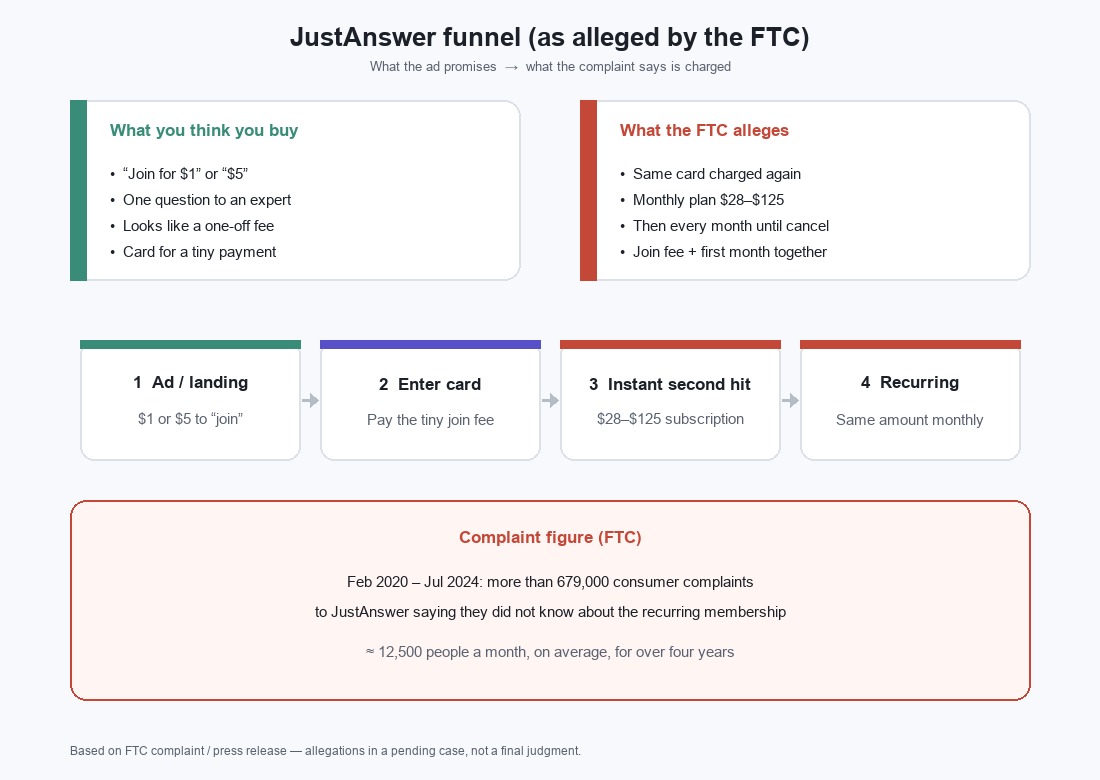
The numbers in the complaint are blunt. Between February 2020 and July 2024, JustAnswer itself logged more than 679,000 consumer complaints from people who said they did not know they had signed up for a recurring membership — on average about 12,500 a month for over four years. The FTC also quotes internal staff recognising that “the majority of our complaints are related to membership charge confusion” and that the sign-up flow was misleading. Those are allegations and internal remarks cited by the regulator; the case was still pending when the agency published the filing.
This is not the same playbook as quiz apps that bury renewals in grey microcopy after a free trial. Here the FTC’s story is simpler and, for many people, easier to miss: two charges at once, sold as one tiny payment. Related reading on the wider negative-option pattern sits in our Genesis Tech subscription playbook note.
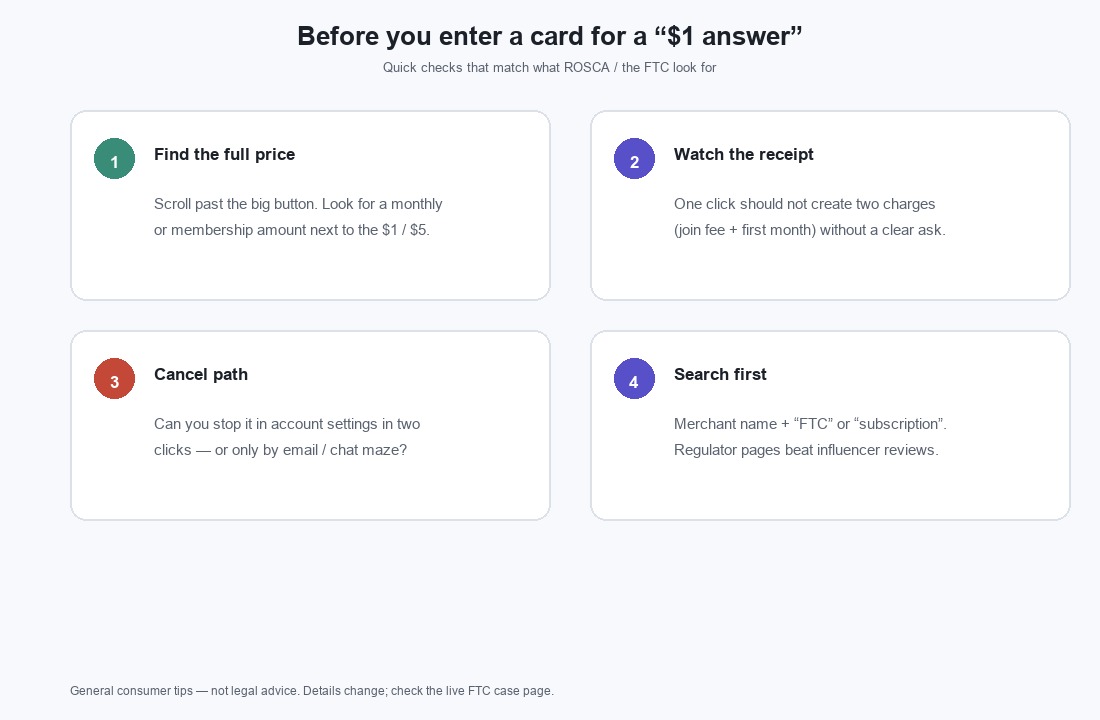
Before you put a card down for any “$1 expert” pitch, a short checklist helps:
If you already saw a small join fee and then a large membership line on the same statement, gather screenshots of the checkout, the confirmation email, and the bank or card entries. Dispute unauthorised renewals with the issuer, and use the routes on Get help. Be wary of anyone who cold-contacts you offering to “recover” the money for an upfront fee — that second pitch is covered on Recovery.
None of this is a court finding of guilt. The FTC files when it has reason to believe the law was broken; a judge decides the case. Check the live JustAnswer matter on the FTC’s legal library if you need current status.
This article is for general information only. It is not legal or financial advice. Details change. If you have lost money, contact your bank or card issuer and use the routes on the help pages.