In October 2026 an Argentine federal judge dismissed a criminal investigation into President Javier Milei and his sister Karina Milei over the February 2025 $LIBRA cryptocurrency saga, court records summarised in international reporting show. Prosecutors had asked for the dismissal. The judge, Marcelo Martínez de Giorgi, said the reported events did not fit a criminal category and that no “criminally relevant deception” had been proved. Milei had already denied fraud allegations; he had not publicly commented on the dismissal when the first wave of coverage landed.
That legal outcome matters. It is not the same as saying “$LIBRA was a good buy.” The consumer pattern is older than any one indictment: a high-status account posts about a brand-new token, the price rips, late buyers arrive, liquidity walks, and the chart looks like a cliff.
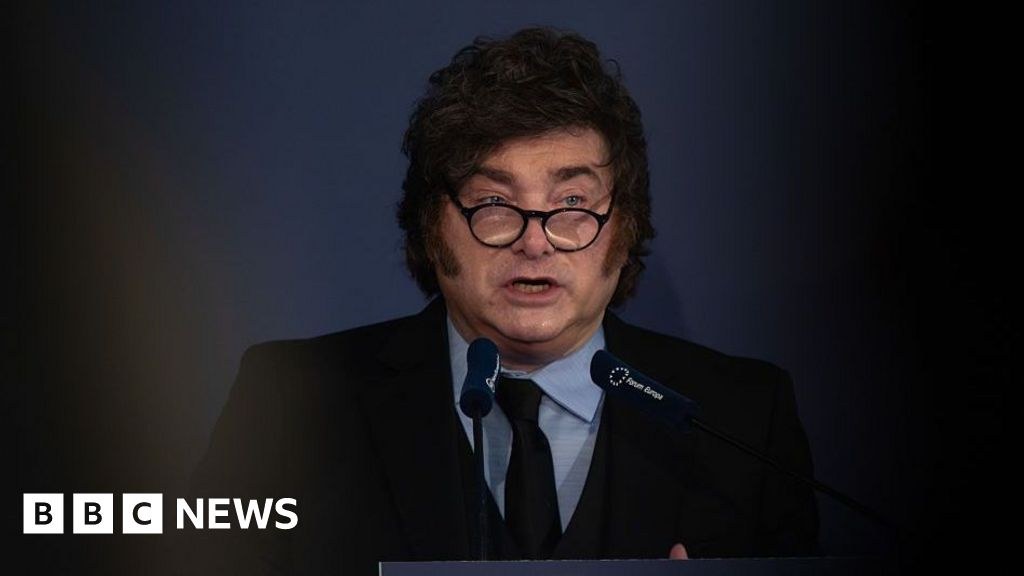
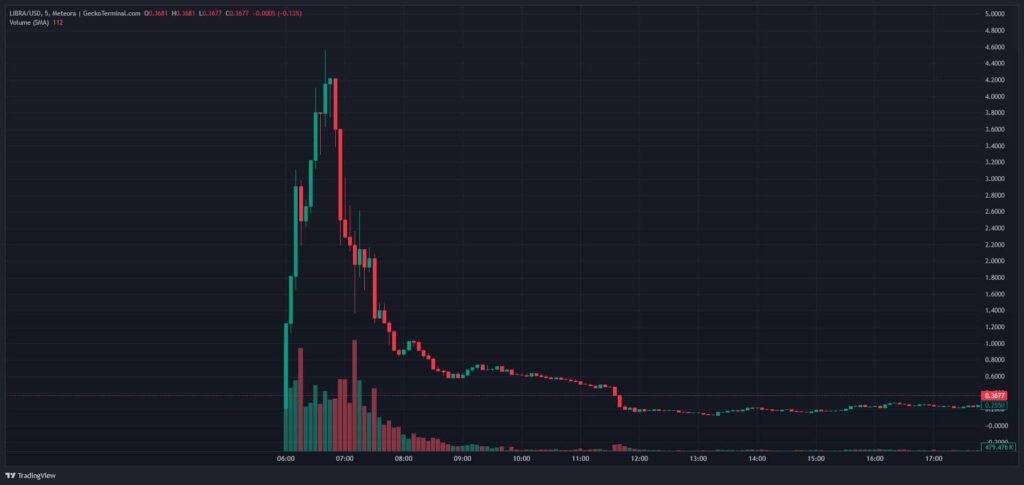
On 14 February 2025 Milei posted on X about a newly launched Solana token branded $LIBRA, framing it as a private project meant to help fund small businesses and start-ups, and sharing a link and contract details. Reporting at the time said the price shot up after the post — peaks around the mid-four-dollar range appear in market charts — then collapsed within hours after he deleted the message. Many holders were left with deep losses. Opposition politicians talked about impeachment; online, people reached for the phrase rug pull.
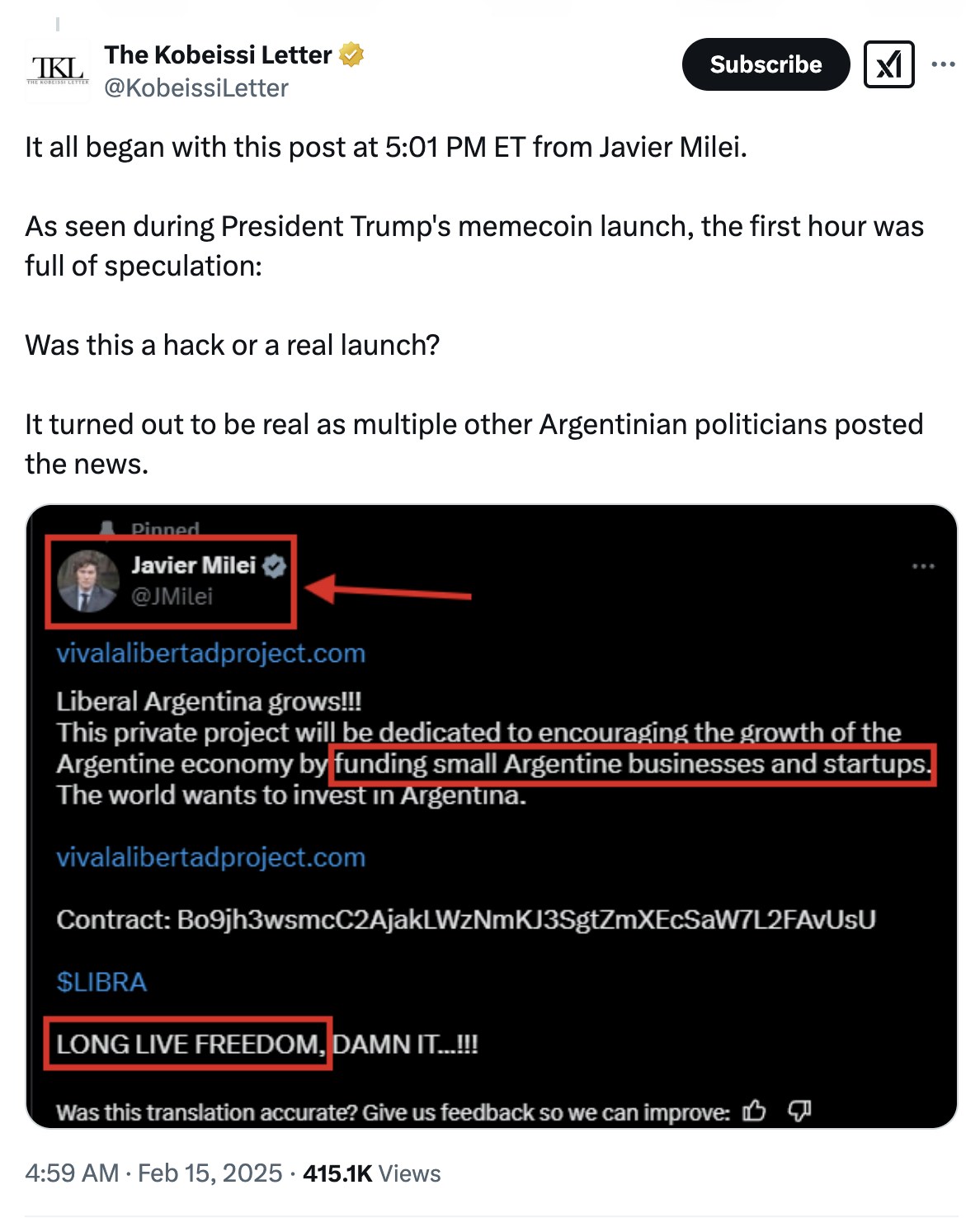
Milei’s public line, in interviews cited by news outlets, was that he had acted “in good faith,” that he “didn’t promote it, [he] merely shared it,” and that he stopped once he learned more about the project. The presidential office said he was not involved in developing $LIBRA. Separately, blockchain researchers told Reuters that wallets linked to the token’s creator had withdrawn roughly $99 million from related liquidity — figures that fuelled the rug-pull narrative around the launch team, not a court finding against the president. CoinDesk and others later reported that the dismissal also covered additional named figures connected to the launch; those are case-status notes, not a scorecard of guilt.
A judge saying prosecutors did not prove a criminal deception against named officials is one thing. A thin memecoin that needed a head-of-state post to find buyers is another. Official social media is still marketing when it names a ticker and a buy link. Deleting the post does not unwind confirmed trades. “People invested voluntarily” is true of almost every casino floor — it is not due diligence.
Before chasing the next official-looking tip: open the person’s official channel and see whether the project is still endorsed; treat contract addresses in a social post as unverified until you check them on a block explorer you trust; assume early wallets can exit first on Solana-style launches — see rug pulls and Pump.fun-style factories. Do not confuse a courtroom dismissal with a product audit. Celebrity-adjacent tickers carry the same structural risks we noted around memecoin FOMO.
If you already lost money on a $LIBRA-style tip, keep the txid, mint address, and screenshots of the post and chart, then use Get help. Anyone offering paid “recovery” of a memecoin dump for an upfront fee is a separate risk — Fake recovery.
This article is for general information only. It is not legal or financial advice. Details change. If you have lost money, contact your bank or card issuer and use the routes on the help pages.