You scroll, and there it is: a familiar executive or investor, mid-sentence, recommending a “limited” crypto desk. The mouth moves. The voice is close enough. The button says learn more. That clip is often a deepfake — footage altered so a public figure appears to endorse a fraud they never touched. Naming Musk-, Bezos- or Buffett-style patterns describes the look of the ads; it does not mean those people ran the scam.

In August 2024 the New York Attorney General’s office published an investor alert after complaints about AI-manipulated videos of well-known business figures used to promote fake investments, often involving cryptocurrency. According to that alert, the videos show up in feeds, digital ads and messaging apps; some are dressed as livestreams. Once someone engages, operators may push the chat onto encrypted messengers, show a dashboard of rising balances, then block withdrawals behind extra fees. Later “recovery” pitches can drain more money.
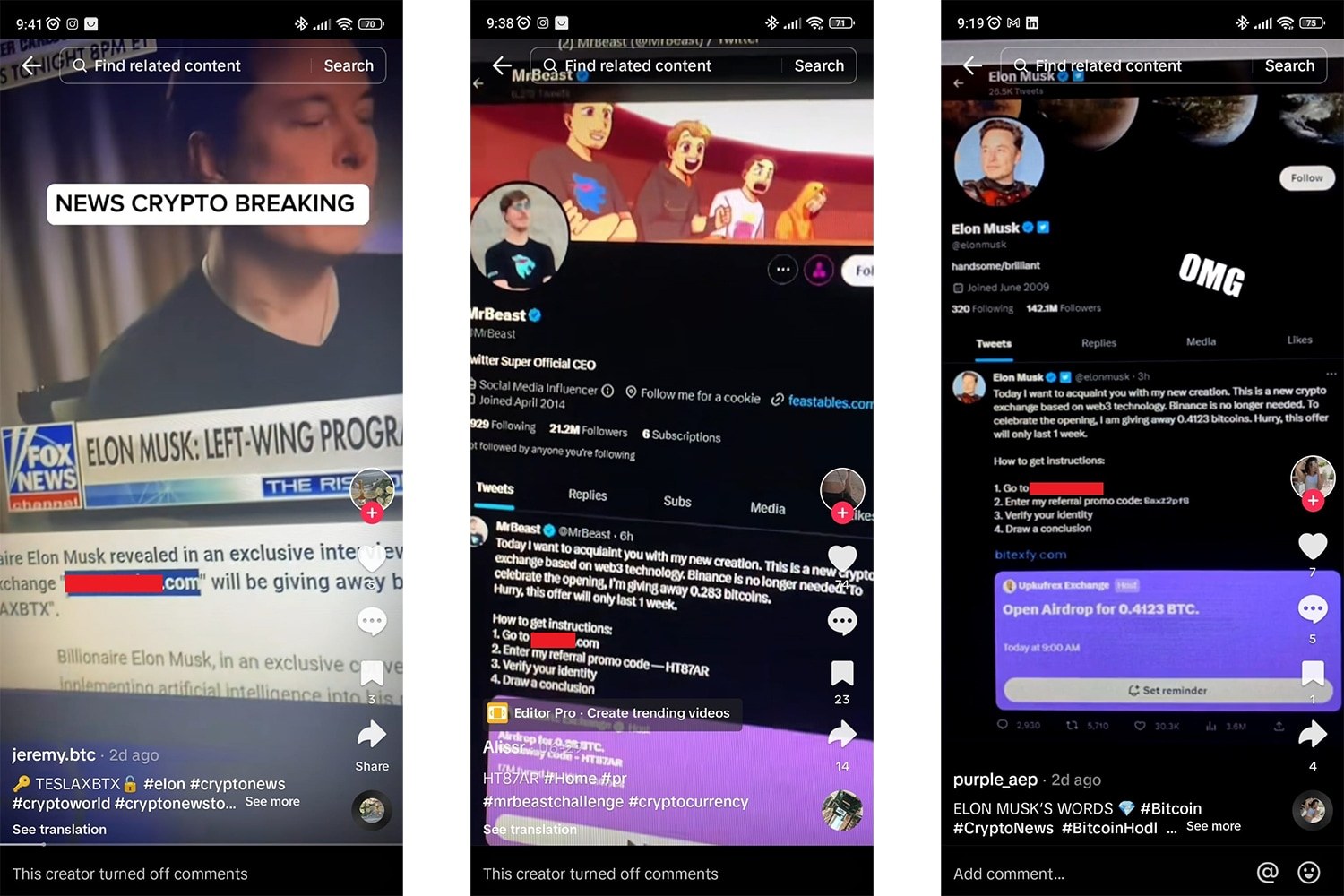
Real feeds look like the Norton research collage below: TikToks that paste Fox-style chyron text over Musk footage, or fake X posts under a MrBeast handle promising a new “crypto exchange” and a referral code. The celebrity branding is the bait; the deposit site is the trap.
The FTC’s consumer advice on celebrity endorsements is simpler still: do not assume the famous person is really behind the ad. Search their name, the company or product, and words such as “scam” or “fake”. Resist limited-time pressure. Treat guaranteed high returns with little risk as a hard stop — investments always involve risk.
Practical checks: open the public figure’s official channels and see whether they promote this product (spoiler: they will not). Compare the clip with older interviews; fraud teams often reuse public footage. Never send crypto to an unlicensed “portal” or a private wallet because an ad said a celebrity did it first. If the conversation must leave the public platform to continue, that is a feature of the trap, not a courtesy.
For giveaway doubles and fake lives that use the same borrowed trust, see Celebrity crypto giveaways that promise to double your coins and Fake YouTube lives with a celebrity crypto pitch. Older endorsement theatre without deepfakes — paid ICO hype and similar — is a different story, as in Centra Tech and celebrity endorsement risk.
If an ad already led to a deposit, start at Get help. Cold messages offering to claw the funds back: Fake recovery.
This article is for general information only. It is not legal or financial advice. Details change. If you have lost money, contact your bank or card issuer and use the routes on the help pages.