You know the message. A stranger who is “not a contact” lectures you about beginners longing Bitcoin with wild leverage, then pivots to mathematics, intraday liquidity, and stable results “over distance.” The invite is soft: if you are interested, the link is in the profile. Behind that politeness sits a funnel. Profile bios often stack several mentor channels; those channels, in turn, carry exchange referral codes. Major platforms openly pay partners a cut of referees’ trading fees — BingX’s public materials, for example, advertise partner commission on fees up to high double-digit percentages. The partner earns when you register, deposit, and churn volume. You keep the liquidations.
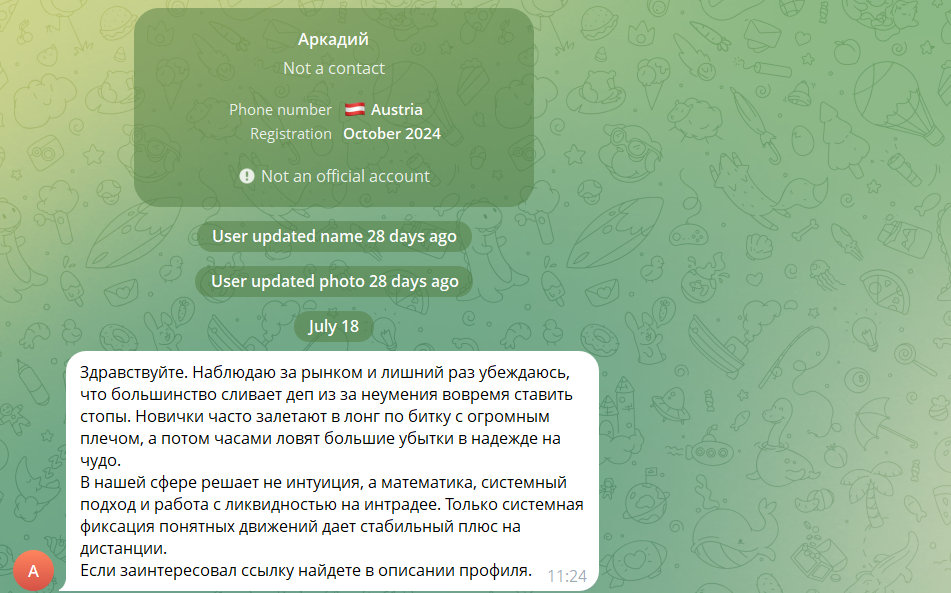
That is a clean conflict of interest. The copy scolds oversized leverage while the archive may still push high-leverage signals, volume contests, or “fix profit” screenshots with no audited book of losers. There is rarely a named licensed adviser, a full trade log, or any promise to make good losses. The same referral code sometimes surfaces across several persona channels, which is what you would expect from a marketing desk, not from independent teachers who stumbled into the same maths.
Mark the chat as spam, block the account, and ignore the bio links. If you already opened an exchange account through such a path, you can still trade carefully — or not trade at all — but you do not owe the spam sender loyalty, remote access, or API keys. For reporting routes after a loss, use Get help. Anyone offering to reverse futures losses for an upfront “unlock” fee is a second problem; see Fake recovery.
This article is for general information only. It is not legal or financial advice. Details change. If you have lost money, contact your bank or card issuer and use the routes on the help pages.