A certain class of Telegram bot sells jealousy as a product. Paste a profile link, it claims, and a neural network will scour “millions of accounts” for private photos. The branding is crude; the interface looks technical — encryption acronyms, database brand names, sub-thirty-second search times. None of that proves a lawful archive exists.
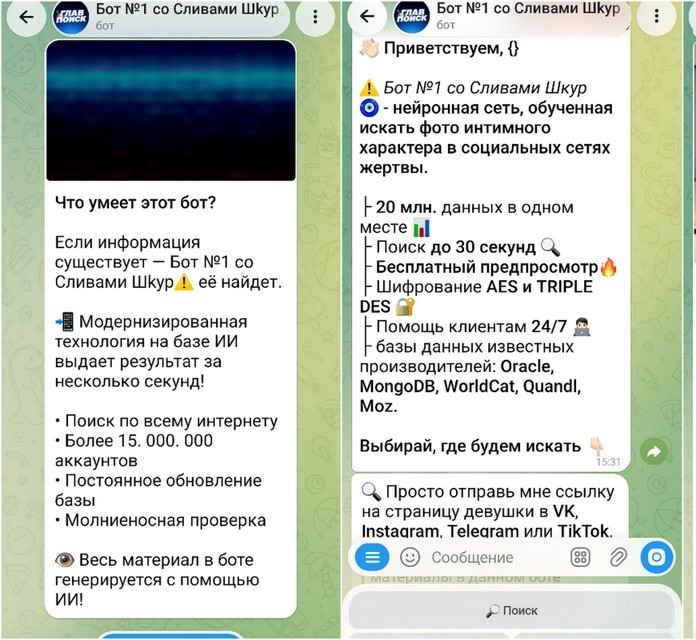
Look closer and the same ecosystem advertises a second step: upload one ordinary photo and receive a “hot video” of that person acting out a script. That is not a leak search. That is non-consensual sexual deepfake generation, a pattern journalists have already documented across dozens of Telegram bots. Some screens even admit the material is AI-generated while the marketing still talks like secret footage.
Payment usually appears after a blurred “preview”: unlock the full pack, buy coins, complete tasks, invite friends. Whether the charge clears or not, you have already fed the operator links or images of real people who never consented. That creates privacy harm for them and blackmail risk for you. Never upload photos when you cannot prove the person is an adult and consenting — and never treat these bots as investigative tools.
How to check: if the pitch mixes “secret database” with “we generate it with AI”, leave. Save the bot username and payment details for a report; do not complete the purchase. If someone later threatens you with the images you requested, that is a separate crime — go through proper channels, not a second Telegram “fixer”.
If you paid a bot or are being extorted, start at Get help. Ignore crypto recovery agents who cold-message you afterwards; see Fake recovery.
This article is for general information only. It is not legal or financial advice. Details change. If you have lost money, contact your bank or card issuer and use the routes on the help pages.