The pitch arrives as a friendly message: you are overloading your chart, a “simple system” of liquidity zones will fix it, and access sits in the profile description. Follow the trail and you meet brands such as GG Invest and a gated room styled as ST Crypto | Ilya Monk — sometimes with twin personas such as “Ivan” or rotating cold-spam accounts pointing at the same managers.
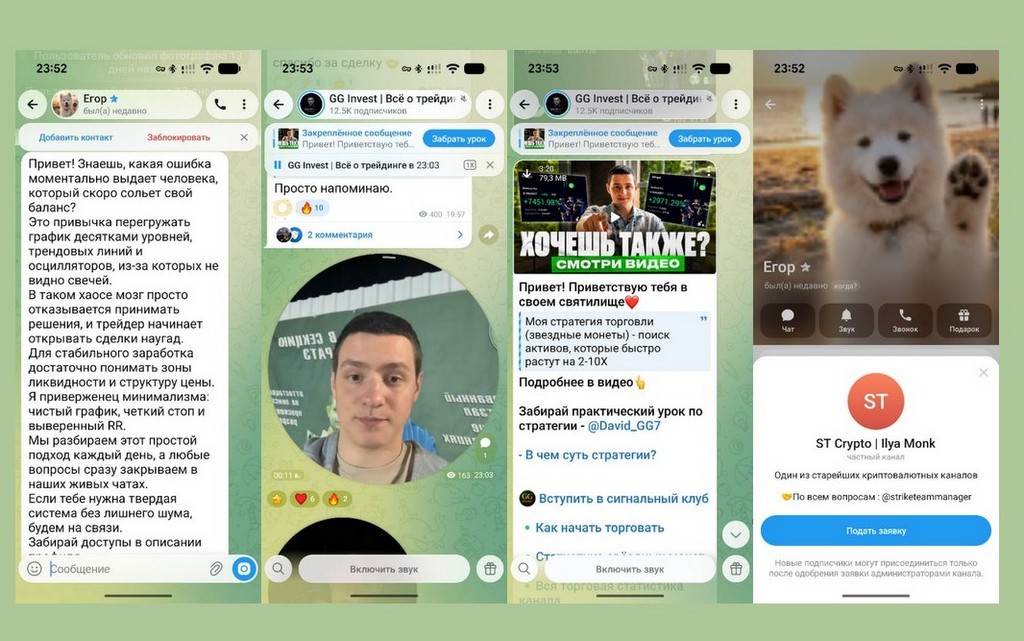
Public posts lean on video notes, firework reaction counts and thumbnails with absurd percentage gains. The private invite talks like an “oldest crypto channel” and funnels questions to a manager handle. A sibling VIP brand has also been promoted with BingX-flavoured imagery and the same advertising contact pattern.
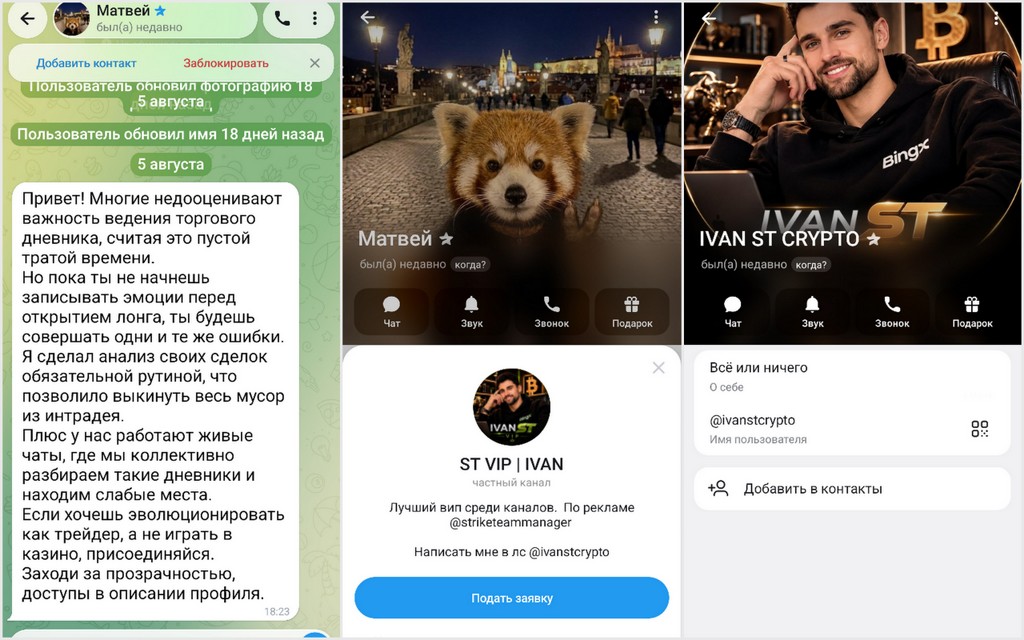
What a quick check actually shows is thin: no verifiable personal trading track record, no full account history with losses, and a clear commercial path onto an exchange via referral links. Exchange affiliate programmes pay a cut of trading fees. High-leverage futures signals — twenty-times cross margin, stop-loss “later” — keep people clicking. That is a conflict of interest dressed up as mentorship. The same referral-plus-signals shape shows up across many Telegram trading funnels.
Before you register through anyone’s code, open the exchange yourself, ignore unverified win-rate screenshots, and ask who earns when you trade often rather than when you trade well. Do not hand over API keys, seed phrases or remote access for “copy trading setup”.
If a signal group or “VIP” already cost you money, start at Get help. For people offering to recover the loss for a crypto fee, read Fake recovery.
This article is for general information only. It is not legal or financial advice. Details change. If you have lost money, contact your bank or card issuer and use the routes on the help pages.