The threat arrives first. Someone has images, or says they do, and names a price for keeping them private. The person reading it is looking, immediately, for anyone who can make the sender stop. That search is the second business. The Federal Trade Commission says a firm was waiting there, selling a rescue to people who were already frightened.
In a complaint filed in October 2026, the FTC says Digital Forensics Corporation, its owner Dmitry Belkin, and related companies took at least $60 million from people in that position between February 2023 and July 2026. These are allegations. A court has frozen the operation while the case goes on. There has not been a final ruling on the merits. An allegation plus a freeze is not a conviction. It is a reason to read what was being sold.
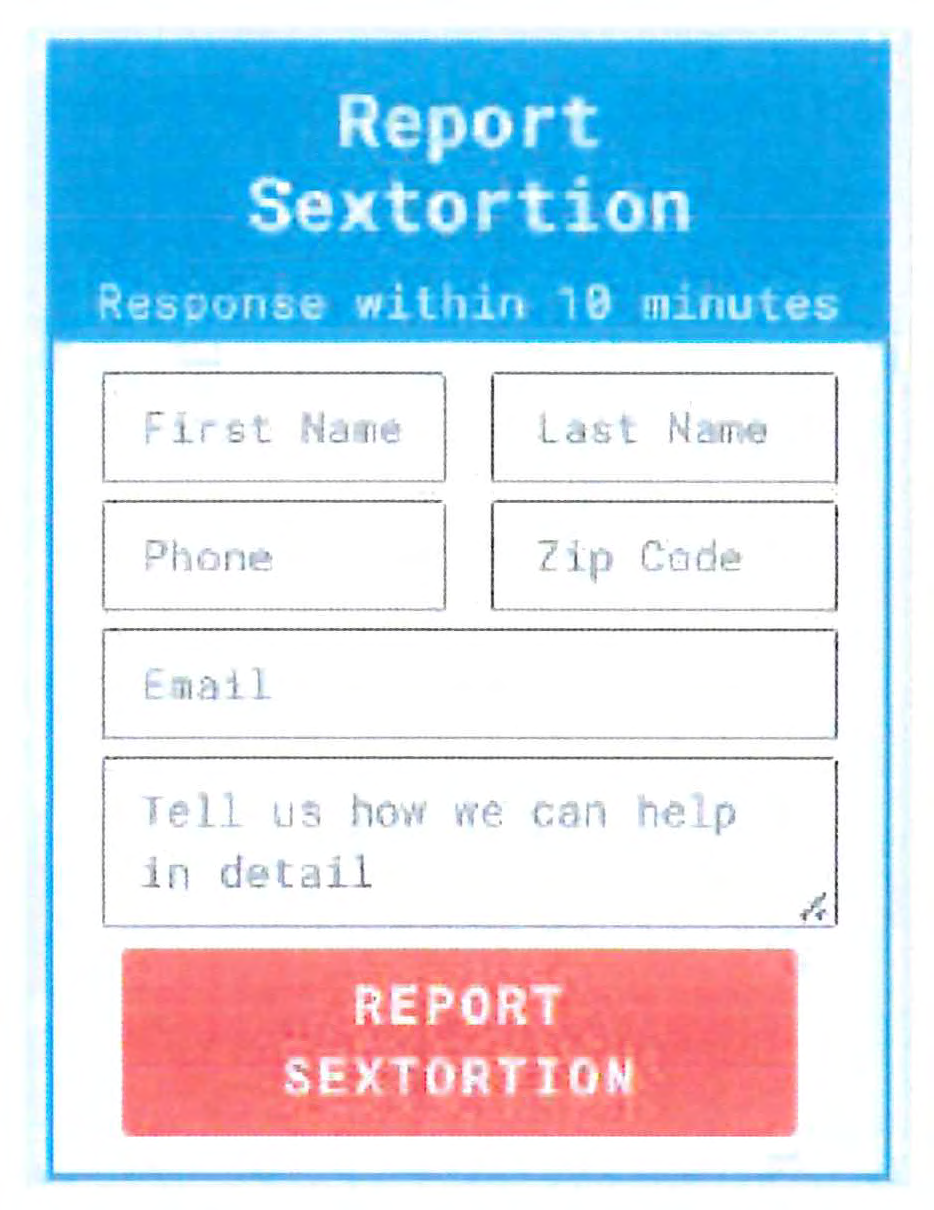
The form promises a response within 10 minutes. Ten minutes is the tempo of the first crime. The firm, on the FTC's account, matched it.
How it works
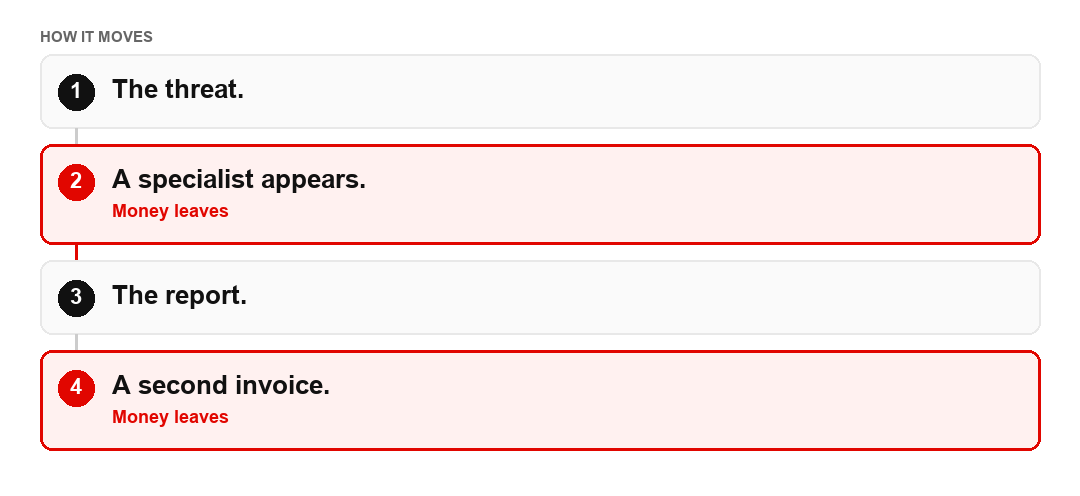
- The threat arrives in a chat or an inbox, with images or a claim to have them. Paying the sender is what the sender wants. It does not delete a copy.
- Ads and search results offer someone who will find the sender, stop them, write a report and tell the police. The FTC says that first package was sold for between $1,499 and $20,000. The price arrives before anyone has looked at the messages.
- The complaint says staff often blocked the account, pasted saved map coordinates into a write-up and built chat transcripts, instead of the tracing that was sold. A map pin looks like an investigation. A pin you cannot check is a picture.
- Another package is offered, for monitoring and for telling the police. The FTC says that was not delivered either, and that criticism was buried under fabricated reviews. The second invoice is sold at the moment the first fear has not faded.
Signs and red flags
A promise to identify a stranger on the internet and stop them, sold at speed, with a card payment before any written scope. A report full of precise map pins and chat logs you cannot check. Pressure to buy a "phase two" the moment the first invoice clears. A company that will not show a real case number at a police force. Reviews that appeared in a clump. A real police report has a number you can ask the police about. A PDF with coordinates does not.
Cases and figures
The FTC's press note and the complaint put the takings at at least $60 million from February 2023 to July 2026, and say nearly all of the income came from this line of work. A judge in the Northern District of Ohio granted a preliminary injunction. That preserves the freeze. It does not decide whether the allegations are proved. Until that decision, the safe reading is the FTC's: this is what the agency says was sold, and a court has stopped the firm trading while it looks.
The amount matters because it is not a handful of desperate payments. At least $60 million, on the complaint, came from people who had already been threatened and then paid a second time to make the first threat go away.
What to do and where to report
Do not pay the person making the threat, and do not pay a private firm that says it will hunt them. Block the account, keep the messages, and tell the platform through its own reporting tools. In the United States use reportfraud.ftc.gov and, for the threat itself, ic3.gov or a local FBI field office you look up yourself. The FTC's own note on this pattern is on its consumer advice page.
If images of a child are involved, report that to the police and to the hotline your country publishes for child sexual abuse material. Do not hunt for a phone number in a comment thread.
If you were hit, start at Get help. The wider warning about paid recovery is on Fake recovery.
This is general information, not legal or financial advice. The rules and the figures change. If money has already left, contact the bank and the authorities through the help pages.