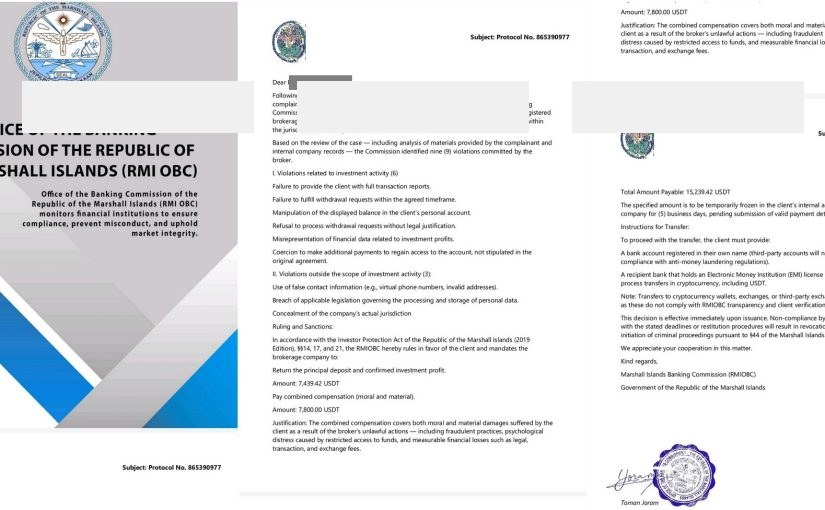
One version of the sequel looks like this. After a complaint about an offshore broker, an email arrives from the “Office of the Banking Commission of the Republic of the Marshall Islands (RMI OBC)”. A protocol number, a seal, a list of nine violations, and a tidy award in USDT — deposit plus “moral compensation” — sit frozen on your internal broker account for five business days until you supply the right bank details (sometimes an EMI-licensed account). Transfers to ordinary crypto wallets are solemnly discouraged, which would be funny if the award itself were not denominated in a stablecoin.
That contradiction is the tell. Real supervisors do not run retail clawbacks by PDF into the same suspect trading cabinet that already refused your withdrawal. Invented act titles and a request for fresh payment details are classic recovery-scam furniture: the goal is another transfer, another “unlock”, or a harvest of identity documents. The Marshall Islands’ banking oversight arrangements have also been in flux toward a monetary authority model — which is one more reason not to trust a cold PDF over primary government channels you looked up yourself.
Do not send fees, do not open accounts a stranger nominates, and do not treat a watermarked protocol as a court order. Keep the file as evidence and report through ordinary fraud routes. More on the lawyer-shaped variant: FBI tips on fake recovery firms.
Start at Get help. Read Fake recovery before any “release” payment.
This article is for general information only. It is not legal or financial advice. Details change. If you have lost money, contact your bank or card issuer and use the routes on the help pages.