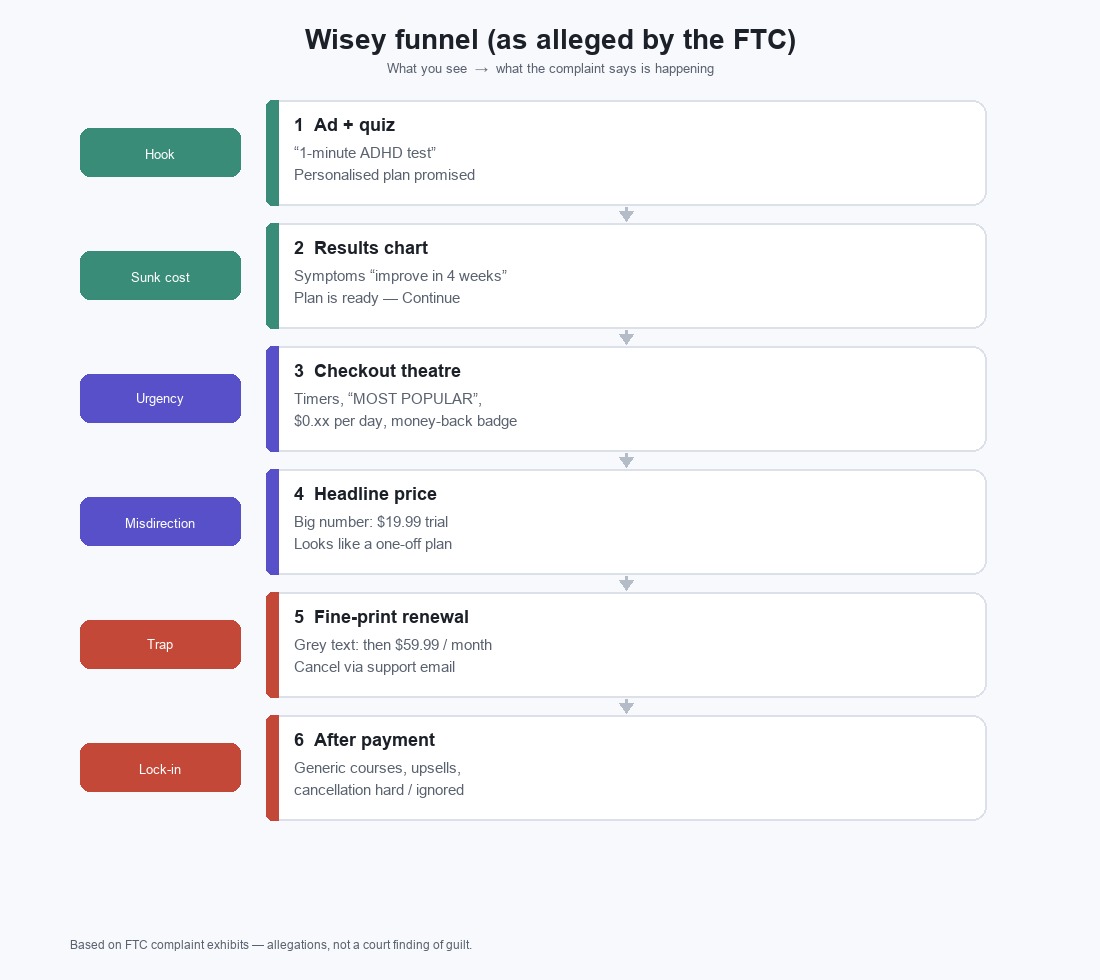
In June 2026 the US Federal Trade Commission (FTC) sued a cluster of companies behind Wisey, an online programme marketed as a way to diagnose and manage ADHD symptoms. In the complaint the agency says the funnel was built to feel like a short quiz and a low-cost plan, while the real product was an auto-renewing subscription that many people did not mean to buy. Stripped to a schematic, the path looks like this:
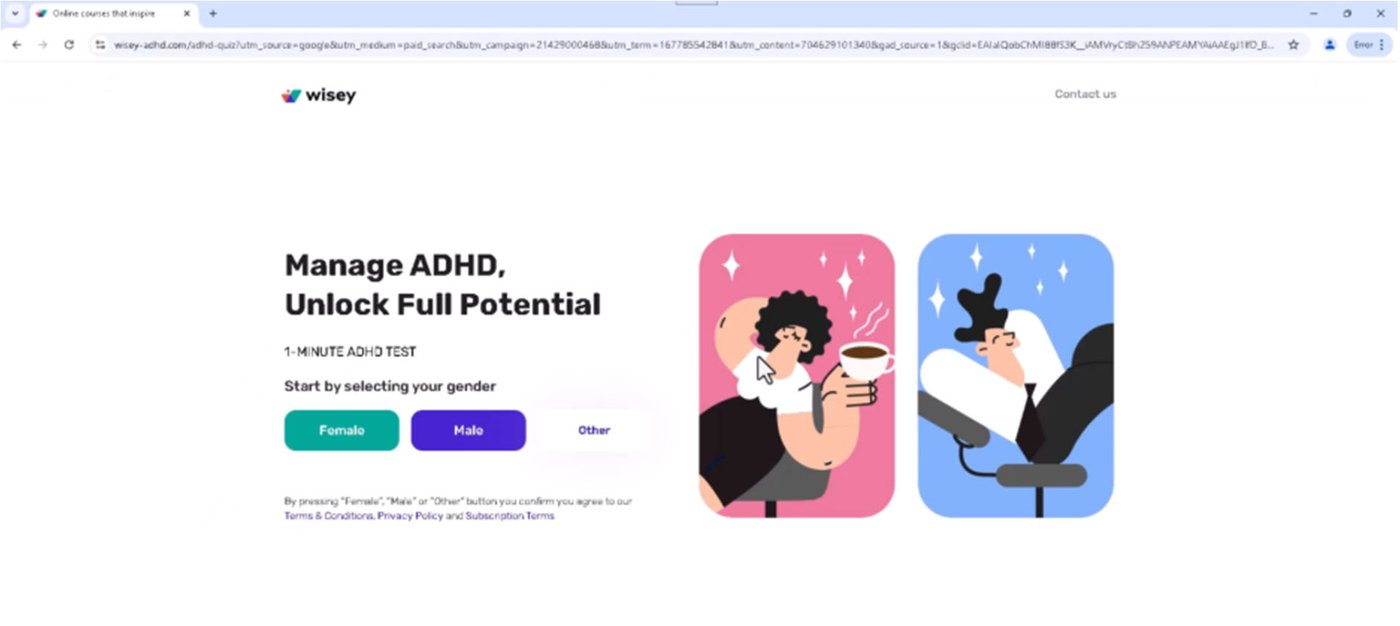
The pitch starts soft. Ads talk about cracking the “ADHD code” or how rare your “ADHD type” is. Click through and you land on a one-minute test that asks you to pick a gender and keep going:
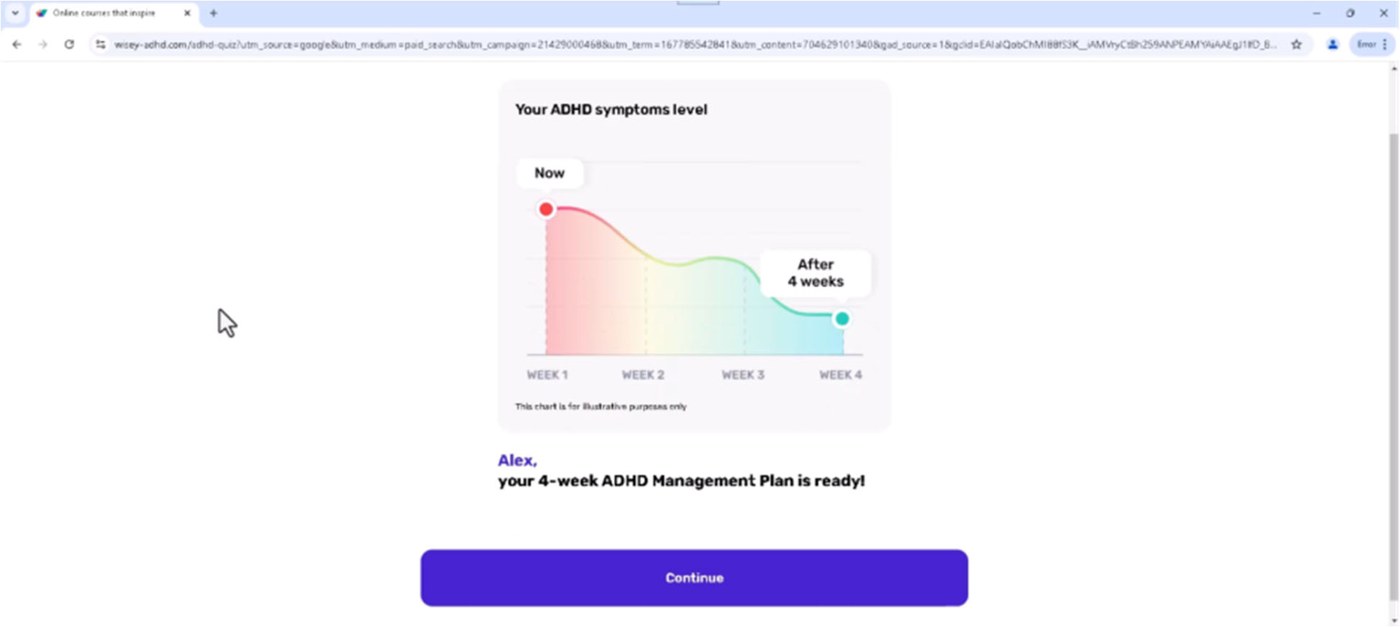
The quiz, according to the FTC, always finds at least some ADHD-like struggle — even when someone reports no symptoms. Then comes a polished results screen: a falling “symptoms” chart, a “4-week ADHD Management Plan”, and a big Continue button. The complaint notes that the chart is illustrative marketing, not a clinical assessment.
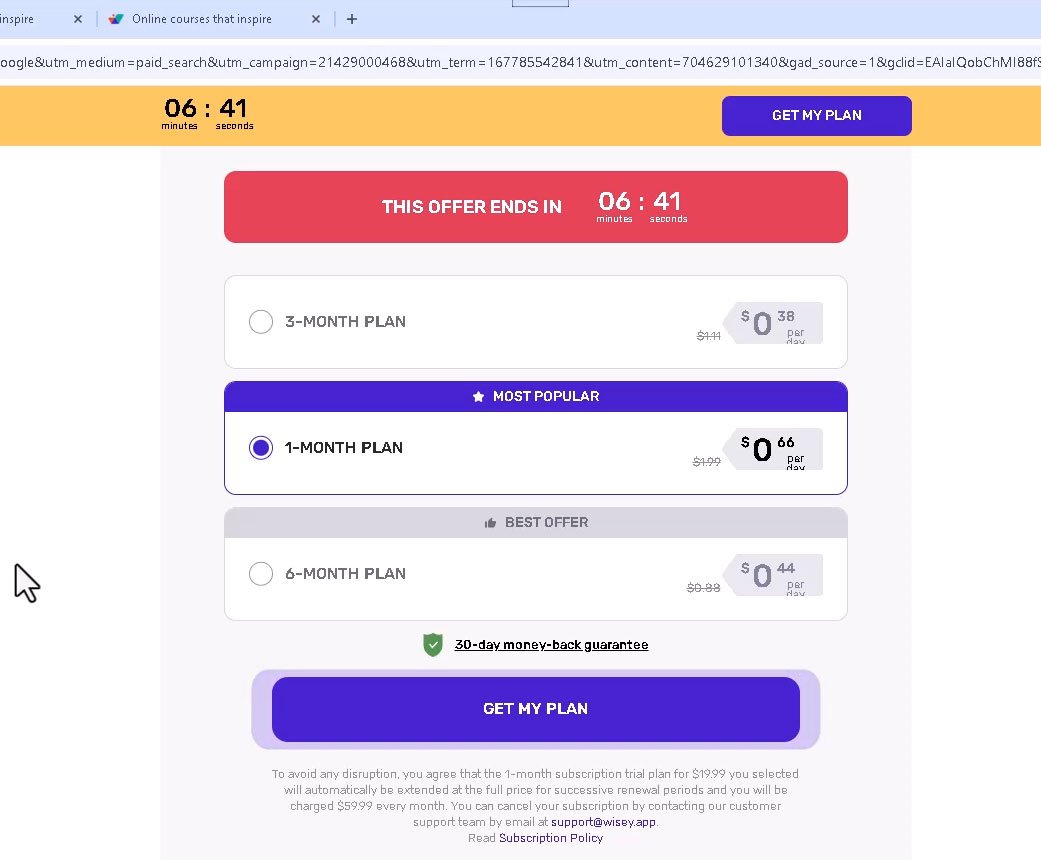
Checkout is where the money story changes. The FTC describes countdown timers, a flashing “GET MY PLAN” button, daily prices under a dollar, and a bold 30-day money-back line. Plan cards highlight a “most popular” one-month option. Beneath that theatre, the complaint quotes fine print saying a $19.99 trial extends at $59.99 every month, with cancellation steered to email support rather than a clear in-account stop button:
The payment overlay the FTC exhibits leans harder into the one-time feel: a $19.99 total, “introductory discount” copy, and a stack of “special modules” marked free — without a conspicuous auto-renew line on that same card:
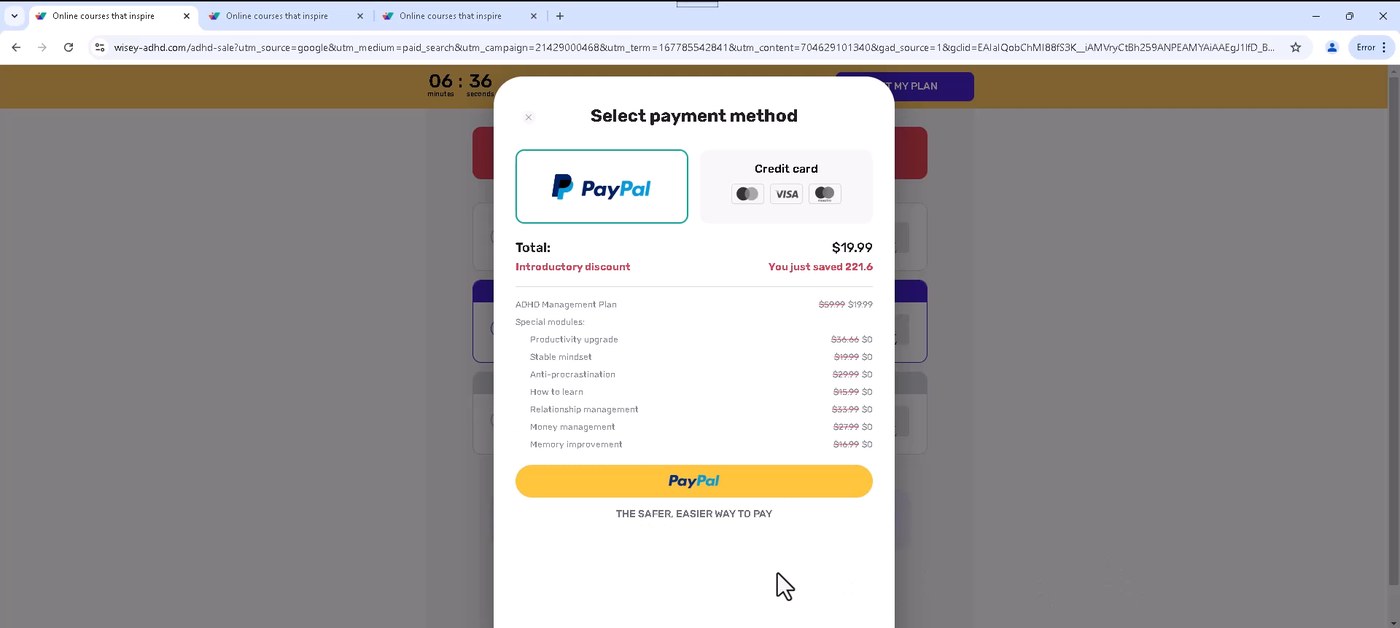
What people get after paying is, on the FTC’s account, generic course material that is not personalised and does not even discuss ADHD. Upsells for e-books or a “memory training” add-on allegedly add further recurring charges. Cancellation is described as hard: no simple cancel control in settings, ignored emails, demands to justify leaving, and in some cases continued billing after support said the account was cancelled. From January 2023 to August 2025, the complaint says Wisey took more than $15.4 million from US consumers through PayPal alone.
None of this is a court finding of guilt. It is what the FTC alleges under the FTC Act and the Restore Online Shoppers’ Confidence Act (ROSCA), the US rules on clear disclosure and informed consent for negative-option (auto-renew) deals. A federal court later entered temporary restraining and preliminary-injunction relief in the case; check the live FTC docket if you need current status.
If you paid for a quiz-led “ADHD plan” and then found monthly charges you did not expect, gather screenshots of the checkout, bank or PayPal statements, and any cancellation emails. Dispute unauthorised renewals with your card issuer or PayPal, and use the routes on Get help. Be wary of anyone who cold-contacts you offering to “recover” the money for an upfront fee — that pattern is covered on Recovery.
This article is for general information only. It is not legal or financial advice. Details change. If you have lost money, contact your bank or card issuer and use the routes on the help pages.