The attachment looks serious: UBS branding, a Zurich street address, a stamp, and a notice that more than €140,000 is waiting — if you first pay a “state duty” of about €1,415. Real banks do not unlock large inbound payments by asking you to wire a fee to a stranger’s account. Charges, when they exist, are handled through authenticated banking channels, not a cold PDF.
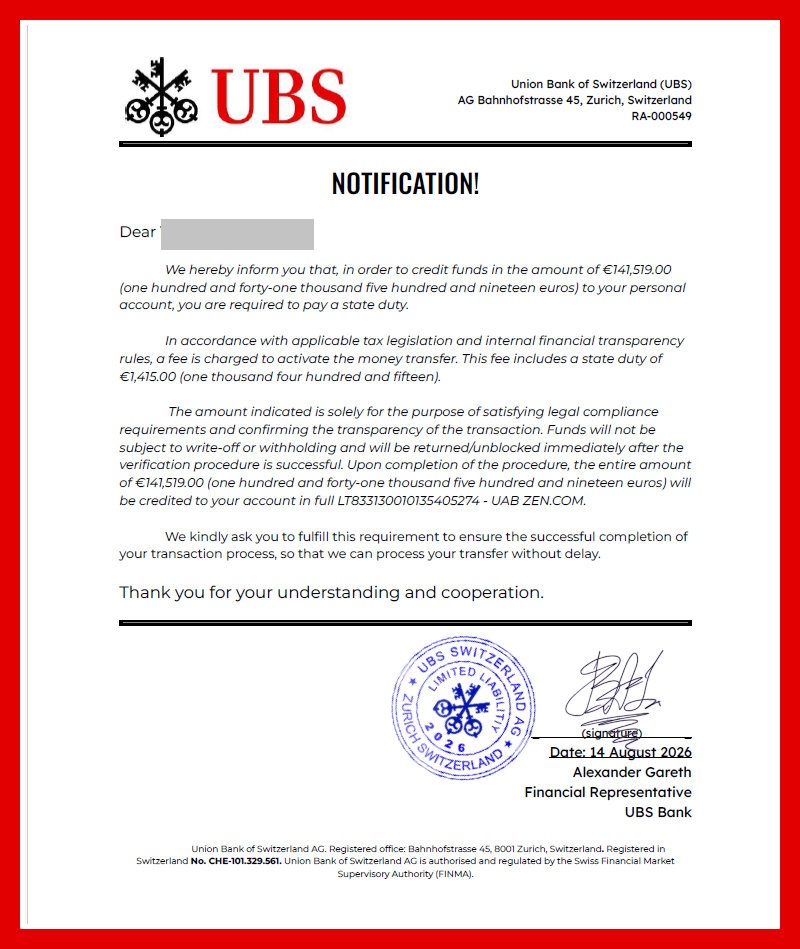
A few details give the forgery away even before the fee. The letterhead leans on “Union Bank of Switzerland AG”, a historical name that disappeared into today’s UBS AG decades ago; copying Bahnhofstrasse 45 and a Swiss company number from public pages does not make the document genuine. The payment instructions point at an account that is not a Swiss International Bank Account Number (IBAN) format, and the prose wanders through vague “internal financial transparency rules” without a value date, originating bank, SWIFT details, or a secure way to verify the payment. A signature labelled “Alexander Gareth” and a round stamp prove only that someone can design a layout.
Do not pay the €1,415. Do not send a passport scan, card details, or one-time codes. If you want to ask UBS anything, use contacts published on the bank’s own website — not numbers or emails inside the letter. Keep the file and any payment details if money already left, then contact your bank about reversing the transfer and report through Get help. Offers to “clear” the fee for you later are usually another round of the same game; see Fake recovery.
This article is for general information only. It is not legal or financial advice. Details change. If you have lost money, contact your bank or card issuer and use the routes on the help pages.