Romance-shaped spam does not need a dating site. Messenger bots send soft, reusable notes that could fit almost anyone: missing old meetings, thinking of you at night, hoping to sit in a café “like before”. A name or a business detail is sprinkled in so the bait feels personal. The real product is the button — find out who it is — which pushes you to launch another bot, share contacts, open a mini-app, or pay to “unlock” a sender who may never have existed.
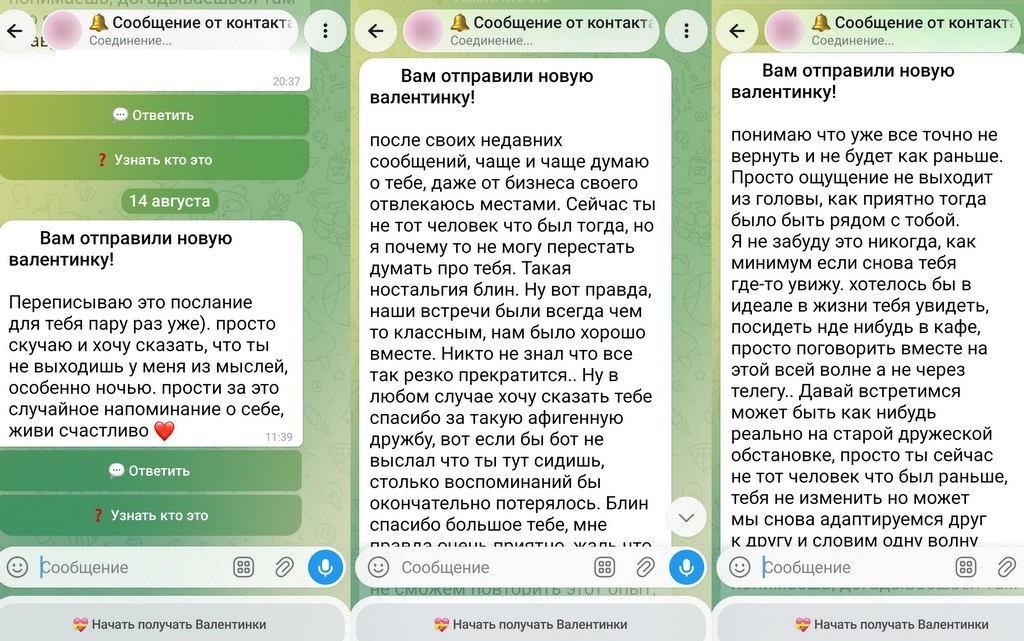
Series of messages keep the emotion climbing while the commercial footer stays in view: start receiving valentines, send one yourself. Curiosity in one inbox becomes viral recruitment in the next. A genuine former friend who wanted to reconnect would rarely need a monetised middleman and a permanent reveal button.
Before you tap, ask whether the text is generic enough to mass-send, whether the bot mentions itself inside the love letter, and whether any payment or contact scraping sits behind the reveal. Forwarding the link to friends only widens the net. You can ignore the thread entirely; you do not owe a bot an answer. If you already paid or shared data, use Get help. Anyone offering to “recover” a small bot payment with a larger fee is still a risk — see Fake recovery if that pitch appears.
This article is for general information only. It is not legal or financial advice. Details change. If you have lost money, contact your bank or card issuer and use the routes on the help pages.