Bots branded like Anonimka (sometimes shown as Anonka-style handles) dress up as a sweet anonymous-confession toy: someone “still thinks about you”, wants to meet “like before”, or has been dreaming about you for months. The copy is deliberately universal. There is no detail that only a real friend would know. Then comes the hook — a locked button along the lines of “Find out who this is”.
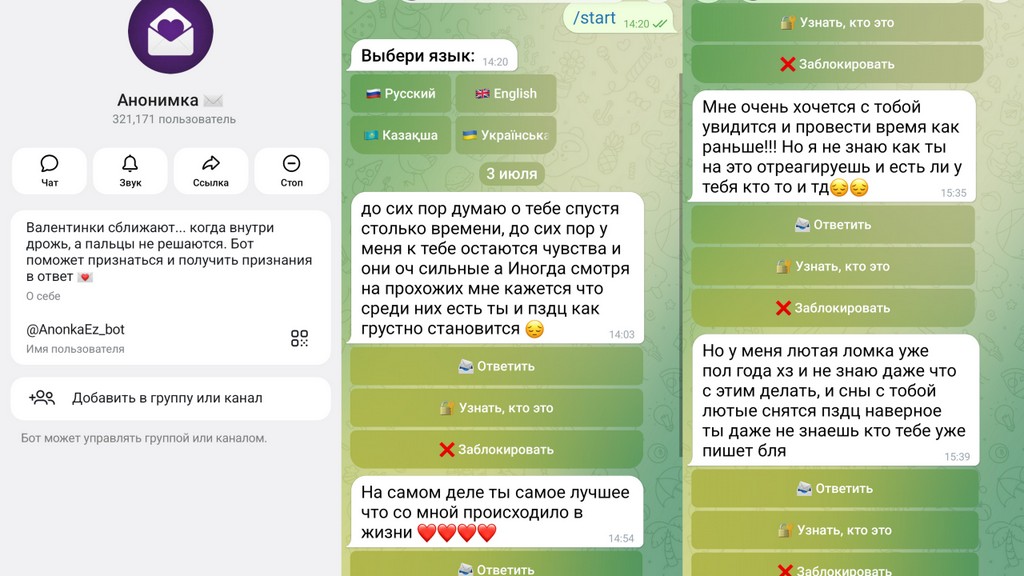
The risk is social engineering, not a magical virus in your phone. Telegram’s own bot documentation is blunt: a bot you chat with privately can see what you send it; a bot added to a group with message access can see group traffic, and Telegram does not police how a third-party developer handles that data. Paying, sharing a phone number, pasting login codes, or adding the bot to a channel with admin rights is how a curiosity game becomes a data or money problem. A true anonymous service cannot honestly sell a deanonymisation of the sender without breaking the promise that made the message “anonymous” in the first place.
You do not need to press the unlock button. Block the bot, report spam, and skip any payment or “verification” step. Getting a template confession does not mean your account was hacked. If you already paid or shared codes, use Get help.
This article is for general information only. It is not legal or financial advice. Details change. If you have lost money, contact your bank or card issuer and use the routes on the help pages.