The contact arrives as a formal letter, email or messenger note: a “law firm” or estate locator has found you as heir to a long-lost relative’s life insurance or inheritance. There is secrecy, a deadline, and a split with charities and the firm. Reply, and the next ask is personal data — then fees for taxes, banking, probate or compliance before any money can “release.” The Federal Trade Commission (FTC) has repeated the same blunt line: the inheritance does not exist; the goal is your information and your money.
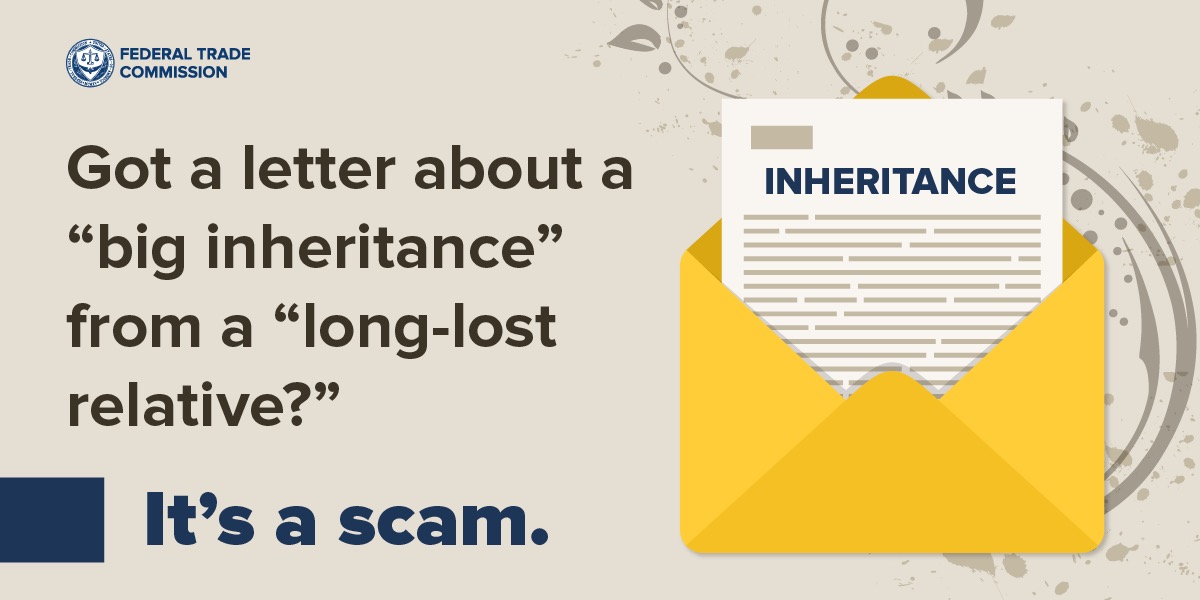
Legitimate executors and insurers do not cold-recruit strangers over free webmail and then demand gift cards, wires or crypto to unlock an estate. The United States Postal Inspection Service (USPIS) likewise flags unclaimed-inheritance solicitations that invent government regulations and introduce a second “banker” or “tax agent” to keep the payments going. Each new obstacle is another fee. Secrecy is part of the script so you do not show the letter to a relative or a lawyer who would kill the story in minutes.

Do not reply. Do not send documents, account numbers or any payment. If you already answered, stop contact, keep the letter and chat, and tell your bank if you transferred funds. Report the approach through ordinary fraud channels rather than hiring a stranger who promises to finish the “release.”
Start at Get help. Paid “estate recovery” after an advance-fee hit is usually a second scam — Fake recovery.
This article is for general information only. It is not legal or financial advice. Details change. If you have lost money, contact your bank or card issuer and use the routes on the help pages.